June 16, 2026 • Kwame Osei-Bonsu • 9 min reading time • Prices verified June 18, 2026
Reolink NVR PoE Build vs. Cloud Subscriptions: A 5-Year Cost Breakdown for the Self-Monitored Household
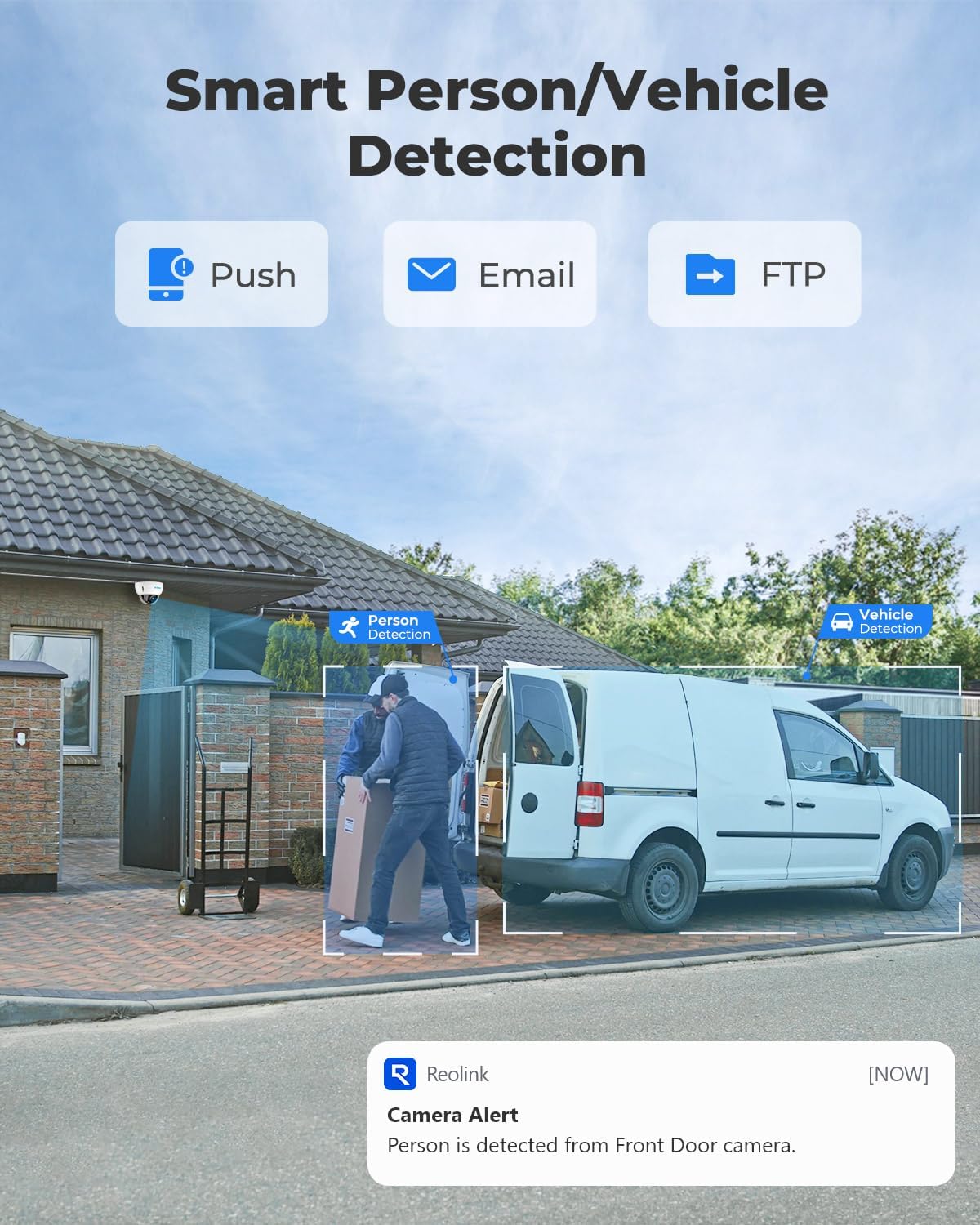
If you’ve been shopping for home security cameras, you’ve probably hit a fork in the road: pay once for a wired system that stores footage on a hard drive in your home, or buy cheaper cameras upfront and pay a monthly fee to store video in someone else’s data center. Neither path is obviously wrong — but the long-term costs look very different depending on which direction you go. A Network Video Recorder, or NVR, is a small box that sits in your home, receives video from cameras over an ethernet cable, and saves everything to an internal hard drive. Power over Ethernet (PoE) means the same cable that carries video also delivers electricity to the camera — no separate power outlet needed at each camera location. The alternative is a cloud-subscription system — think Ring, Arlo, or Google Nest — where cameras connect via Wi-Fi and footage uploads automatically to a remote server, accessed through a monthly plan. This article runs the five-year math on both paths, names the real tradeoffs, and ends with a clear decision rule for the buyer who is actively pricing out a build right now.
| EDITOR'S PICK[aosu SolarCam D1 Max 4-Cam Kit](https://www.amazon.com/dp/B0GLHRL89M?tag=greenflower20-20) | Mid-tier[REOLINK Smart 5MP 8CH Home Secu…](https://www.amazon.com/dp/B07VPMX7Q5?tag=greenflower20-20) | Budget pick[ANNKE 3K Lite Wired Security Ca…](https://www.amazon.com/dp/B00L3W2QJ2?tag=greenflower20-20) | |
|---|---|---|---|
| Resolution | 4K | 5MP | 2MP |
| Storage Capacity | 1TB expandable | 2TB HDD | — |
| Subscription | No subscription | — | — |
| Night Vision | Color | — | Color |
| Detection | Auto Tracking, Vehicle | Person/Pet/Vehicle | AI Human/Vehicle |
| Wired/Wireless | Wireless | Wired PoE | Wired |
| Price | $459.99 | $389.98 | $269.99 |
| See on Amazon → | See on Amazon → | See on Amazon → |
The Baseline Build: What Each System Actually Costs
Let’s anchor on comparable setups — four cameras covering a typical single-family home, with enough resolution (4K or 8MP) to read license plates at a driveway.
Budget Path: Reolink NVR PoE (Self-Install)
Reolink’s RLK8-810B4-A kit — an 8-channel NVR bundled with four 8MP PoE cameras and a 2TB hard drive — retails around $280–$320 as of mid-2026, per pricing tracked across major retailers. Add roughly $80–$120 in ethernet cable, wall plates, and a drill bit set if you’re running cable through walls. The full self-installed hardware cost lands at $360–$440. Professional installation by a low-voltage contractor typically adds $200–$400 depending on your market, but most intermediate buyers self-install. PCMag’s 2024 review of the Reolink RLK8-810B4-A rates this kit as the clearest entry point for buyers who want wired 4K coverage without recurring fees, calling it the lowest total-ownership-cost option in the wired-camera category.
ANNKE
$269.99
In stock on Amazon
Check price on AmazonMid-Tier Path: Arlo Pro 4 with Secure Plus Subscription
A four-camera Arlo Pro 4 starter bundle runs approximately $350–$400 for the cameras alone — no base station required for basic use. Without a subscription, Arlo’s free tier is restrictive in ways that matter for whole-home coverage: device caps and limited event history make it unsuitable as a standalone solution for most households. Arlo’s Secure Plus plan, priced at approximately $12.99/month as documented in CNET’s 2025 article “Ring vs. Arlo vs. Google Nest: Which Camera Subscription Is Worth It?”, is effectively mandatory for households that want reliable event history across all cameras. Over five years, that subscription adds approximately $779 to the hardware cost, bringing the five-year total to roughly $1,154.
REOLINK
$389.98
In stock on Amazon
Check price on AmazonPremium Path: Ring Stick Up Cam with Protect Plus
Ring’s four-camera Stick Up Cam bundle lands closer to $200–$240 for hardware — deceptively cheap upfront. Ring stores nothing without a subscription; the Protect Plus plan runs $20/month, as documented in CNET’s 2025 article “Ring vs. Arlo vs. Google Nest: Which Camera Subscription Is Worth It?”. Over five years that’s $1,200 in subscription fees alone, bringing the five-year total to roughly $1,420 — the highest total cost of any path in this comparison, despite the lowest hardware entry price.

aosu
$459.99
In stock on Amazon
Check price on Amazon5-Year Total Cost of Ownership: Summary Table
| Path | Year 0 Hardware | Monthly Fee | 5-Year Subscription | 5-Year Total |
|---|---|---|---|---|
| Reolink NVR PoE (self-install) | $400 | $0 | $0 | ~$400 |
ANNKE
$269.99
In stock on Amazon
Check price on AmazonANNKE
$269.99
In stock on Amazon
Check price on Amazonaosu
$459.99
In stock on Amazon
Check price on Amazonaosu
$459.99
In stock on Amazon
Check price on AmazonFigures use mid-2026 retail pricing. Subscription costs assume no price increases — historically optimistic for both Ring and Arlo.
The math is stark, and it gets starker if you’re a landlord running multiple properties. Safewise’s 2025 roundup “Best Home Security Camera Systems” specifically flags subscription stacking as a hidden cost for multi-property owners, noting that a four-property portfolio with Ring Protect Plus can run nearly $960/year in subscription fees before a single camera is purchased.
What You Actually Give Up (and Gain) With Each Approach
The cost table above is honest, but it isn’t the whole story. The NVR path has real friction costs that don’t show up in a spreadsheet.
NVR PoE: The Real Tradeoffs
Installation labor is the biggest hidden cost. Running ethernet cable through finished walls is a weekend project for someone comfortable with a drill and a fish tape — but it is genuinely more involved than peeling a mounting strip off a Ring camera and pressing it to the wall. Tom’s Guide’s 2025 article “Best NVR Security Systems” rates wired PoE installation difficulty at “moderate to high” for finished homes, noting that attic and crawlspace access dramatically changes the effort level. Budget two to four hours per camera run if you’re doing it yourself in a typical ranch or two-story home.
Remote access works, but requires setup. Reolink’s NVR can be accessed remotely through the Reolink app, but PCMag’s 2024 review of the Reolink RLK8-810B4-A specifically notes that remote access “works reliably but doesn’t feel as instant or seamless as cloud-native systems.” If you’re a landlord checking in on a property from across the country, this gap matters more than if you’re monitoring your own home.
Hard drive failure is a real risk. The 2TB drive bundled with most Reolink kits is a standard desktop-class drive, not a surveillance-rated drive like Western Digital’s Purple series. Surveillance drives are rated for 24/7 write cycles; desktop drives are not. Replacing the included drive with a WD Purple 2TB adds roughly $60–$70 at current pricing and is worth doing before you rely on the system. PCMag’s 2024 review of the Reolink RLK8-810B4-A identifies the stock hard drive as the component most likely to fail first in long-run use and recommends swapping it at installation.
No professional monitoring option. The NVR path is definitionally self-monitored. If your home is broken into while you’re away with your phone unavailable, no one is dispatching police. Buyers who want 24/7 professional monitoring as a backstop will need to layer in a separate alarm system, which changes the cost comparison meaningfully.
Cloud Subscriptions: The Real Tradeoffs
Subscription prices trend upward. CNET’s 2025 article “Ring vs. Arlo vs. Google Nest: Which Camera Subscription Is Worth It?” documents that Ring raised its Protect Plus price on multiple occasions between 2021 and 2024, and that Arlo restructured its free tier to become significantly more restrictive over the same period. Security.org’s 2025 “Home Security Camera Statistics Report” notes that assuming flat subscription pricing over a five-year planning horizon is an assumption that has not held for any major platform over any comparable historical window. A 15–20% upward drift in subscription costs is a more realistic planning assumption than flat pricing.
Ecosystem lock-in is aggressive. Arlo cameras will not natively work with a competitor’s subscription. Ring cameras are deeply integrated with Amazon’s ecosystem in ways that create friction if you want to exit — footage history is inaccessible after you cancel, and cameras don’t export locally. PCMag’s coverage of Ring’s ecosystem notes that Amazon has progressively moved features, including basic person-detection, behind the subscription paywall over successive product generations.
Privacy exposure is structural, not incidental. Footage stored in a cloud system is accessible to the platform provider, subject to law enforcement requests, and exposed to breaches if the provider’s infrastructure is compromised. Security.org’s 2025 “Home Security Camera Statistics Report” notes that a majority of surveyed home security camera owners were unaware their footage could be subpoenaed without direct notification to them. For buyers collecting footage of a neighbor dispute, a rental property issue, or anything legally sensitive, local NVR storage keeps footage under your physical control.
The Hybrid Path That Most Practitioners Land On
After working through both architectures, the pattern that emerges in practitioner-level guidance — including Tom’s Guide’s 2025 article “Best NVR Security Systems” — is a hybrid build: NVR PoE for the primary camera layer, plus a cloud-connected doorbell camera for the one position where remote live-view and instant notifications matter most.
The doorbell camera is the camera you answer in real time; it needs to feel instant and polished. The perimeter and backyard cameras are the cameras you review after an incident; local storage and 4K resolution matter more than app responsiveness for those positions. Splitting the architecture by use case captures the best of both systems while keeping the five-year cost well below a fully cloud-managed setup.
For a four-camera perimeter build plus one cloud doorbell:
- Reolink 4-camera NVR kit: ~$400
- Ring Video Doorbell Pro 2: ~$200
- Ring Basic (doorbell-only plan): ~$4/month = $240 over five years
- Total 5-year cost: ~$840
That’s roughly 25–30% cheaper than a five-camera fully cloud-managed Arlo setup, and it provides local 4K storage for the cameras that matter most for evidence quality.
Decision Rule: If X, Then Y
If you are a homeowner with wall access (attic, basement, or crawlspace), comfortable with a drill and basic cable runs, and self-monitoring is acceptable: Build the Reolink NVR PoE system. The five-year savings are $700–$1,000 versus a comparable cloud setup, and you own your footage outright. Replace the stock hard drive with a WD Purple surveillance-rated drive before you depend on the system — PCMag’s 2024 review of the Reolink RLK8-810B4-A identifies this as the single most impactful hardware upgrade you can make at installation.
If you are a residential landlord managing two or more properties: The NVR path’s per-property economics become even more favorable as you scale. The remote-access friction is manageable if you pair each NVR with a cloud-connected doorbell camera for the front door. Stacking cloud subscriptions across properties at $20/month each is the fastest way to erase your security-system ROI, as Safewise’s 2025 “Best Home Security Camera Systems” roundup specifically warns when discussing multi-property deployments.
If you rent, live in a finished condo, or cannot run cables: The NVR path is effectively closed unless you’re willing to use surface-mount cable raceways, which many owners find acceptable in garages and utility areas. A cloud system with Arlo’s Secure Plus plan, or Ring’s Protect Basic at the individual-camera tier, is the realistic path — just model the subscription cost honestly over the full lease term before you commit.
If professional monitoring is non-negotiable for you: Don’t treat the NVR-versus-cloud camera decision as your only variable. Add a dedicated alarm system with professional dispatch capability. This keeps the camera layer free to be optimized for evidence quality rather than alert delivery, and it prevents you from overpaying for a cloud camera subscription to get a monitoring feature it can’t reliably provide anyway.
The wired NVR path wins the five-year cost race by a wide margin for anyone with the physical access to run it. But “cheapest over time” and “right for your situation” aren’t always the same answer — and the decision rule above is designed to help you tell the difference.