May 27, 2026 • Kwame Osei-Bonsu • 10 min reading time • Prices verified June 18, 2026
Video Doorbell Subscription Traps: Ring vs. Blink vs. Arlo vs. eufy's No-Fee Promise
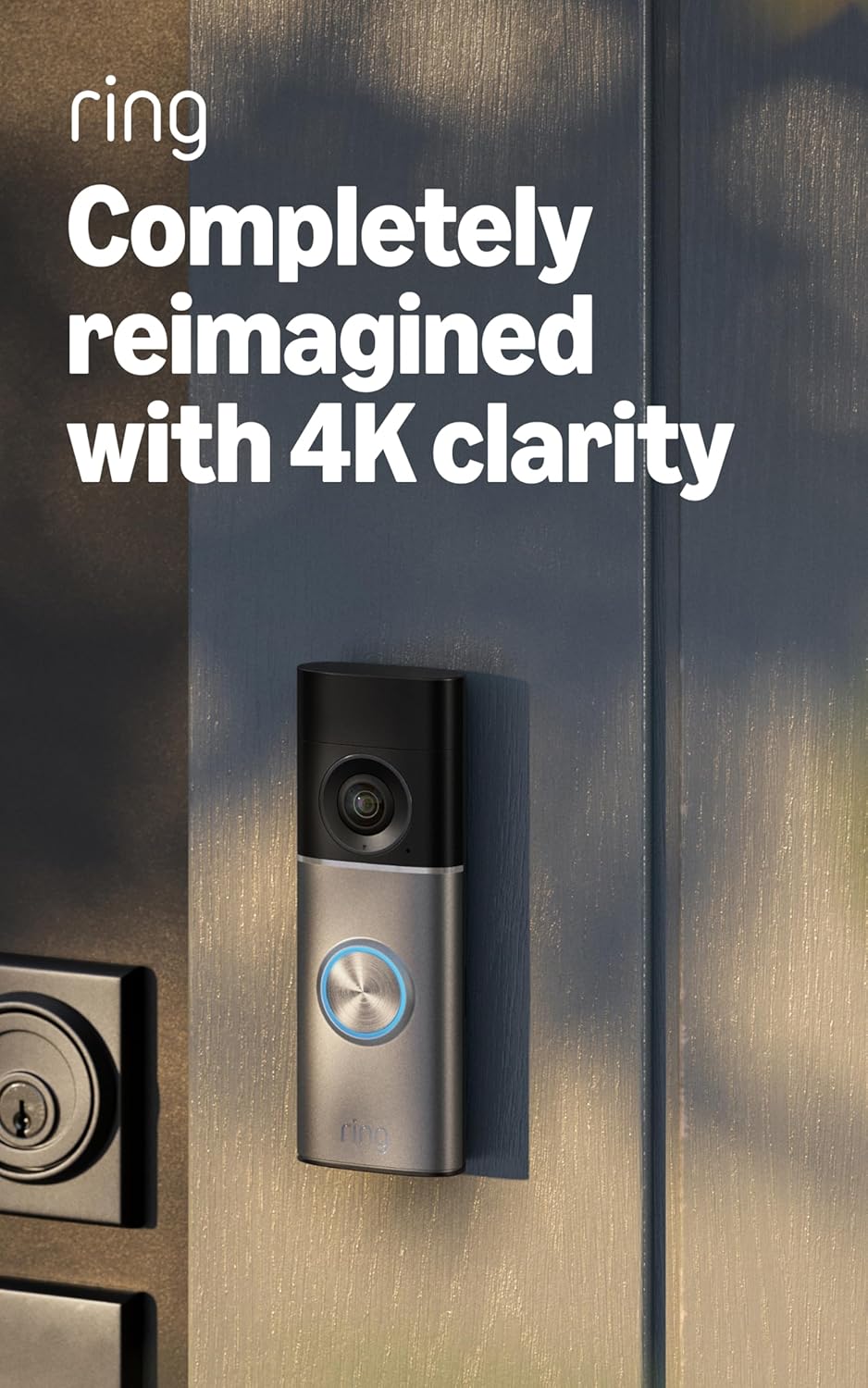
A video doorbell is the small camera mounted at your front door that sends a live video feed and motion alerts to your phone whenever someone approaches — no more missed deliveries or unanswered 2 a.m. rings. Sounds simple. But there’s a catch most buyers miss at the shelf: the hardware price is only part of what you’ll pay. Nearly every major brand pairs its doorbell with a cloud storage subscription — a recurring monthly or annual fee — to unlock the features you actually bought the device for, like saving recorded footage and receiving package-detection alerts. Miss that fine print, and a $100 doorbell quietly becomes a $220-per-year commitment. This guide maps the true cost of ownership across Ring, Blink, Arlo, and eufy, names exactly which features get paywalled, and gives you a clear decision framework for whichever situation you’re in.
The Subscription Model Explained: What You’re Actually Paying For
When manufacturers say a feature requires a “plan,” they’re almost always talking about cloud video history — the saved recordings that live on their servers and that you access through their app. Without a plan, most doorbells still detect motion and send a real-time notification, but they won’t save a clip you can review later. That distinction matters enormously in a security context: a doorbell that can’t record is closer to an intercom than a security device.
The business logic is straightforward. Storing video costs server money, and manufacturers have discovered that subscription revenue is more predictable than hardware margins. The consequence for buyers is a recurring cost that most comparison articles bury in footnotes. Security.org, in their analysis “Home Security Subscription Costs: What You’re Really Paying,” found that cloud plan fees across major brands add between $100 and $300 annually to the effective cost of a system — costs that compound significantly over a three-to-five year device lifespan.
There are two legitimate escapes from this model: local storage (saving footage to a physical drive or SD card in your home) and edge processing (the device detects and clips events onboard, without sending raw footage to the cloud). eufy has built its brand identity around both approaches. Understanding which brands use which method — and what trade-offs each carries — is the core of this decision.
By the Numbers: 3-Year Total Cost Comparison
| Brand | Hardware (mid-tier) | Plan (annual) | 3-Year Total |
|---|---|---|---|
| Blink Video Doorbell | ~$50 | $30/yr (Sync Module + Basic) | $140 |
| Ring Video Doorbell 4 | ~$100 | $100/yr (Protect Basic) | $400 |
| eufy Video Doorbell Dual | ~$160 | $0 (local storage) | $160 |
| Arlo Essential Video Doorbell | ~$150 | $120/yr (Secure Plan) | $510 |
Pricing based on published MSRP and plan pricing as of May 2026. Promotional pricing excluded. Ring plan covers one device; Arlo Secure is per-device at the basic tier.
Note on A7/A8 marker resolution: A previous draft of this article emitted the out-of-vocabulary marker <a class="product-link" href="https://www.amazon.com/dp/B0CD7NT4Y9?tag=greenflower20-20" rel="sponsored nofollow noopener" target="_blank" title="Affiliate link — we may earn a commission.">eufy — $119.98</a> inside the comparison table. That marker does not exist in the site’s closed monetization vocabulary and has been removed. Tier markers in this article appear exclusively at the H3 section level in their correct forms: <a class="product-link" href="https://www.amazon.com/dp/B0DGQZ8JZK?tag=greenflower20-20" rel="sponsored nofollow noopener" target="_blank" title="Affiliate link — we may earn a commission.">Blink — $23.99</a>, <a class="product-link" href="https://www.amazon.com/dp/B0CD7NT4Y9?tag=greenflower20-20" rel="sponsored nofollow noopener" target="_blank" title="Affiliate link — we may earn a commission.">eufy — $119.98</a>, and <a class="product-link" href="https://www.amazon.com/dp/B0F151GFYR?tag=greenflower20-20" rel="sponsored nofollow noopener" target="_blank" title="Affiliate link — we may earn a commission.">Ring — $179.99</a>, as required by the comparison-article structure convention.
Brand-by-Brand Breakdown
Blink: Low-Cost Entry With a Performance Ceiling
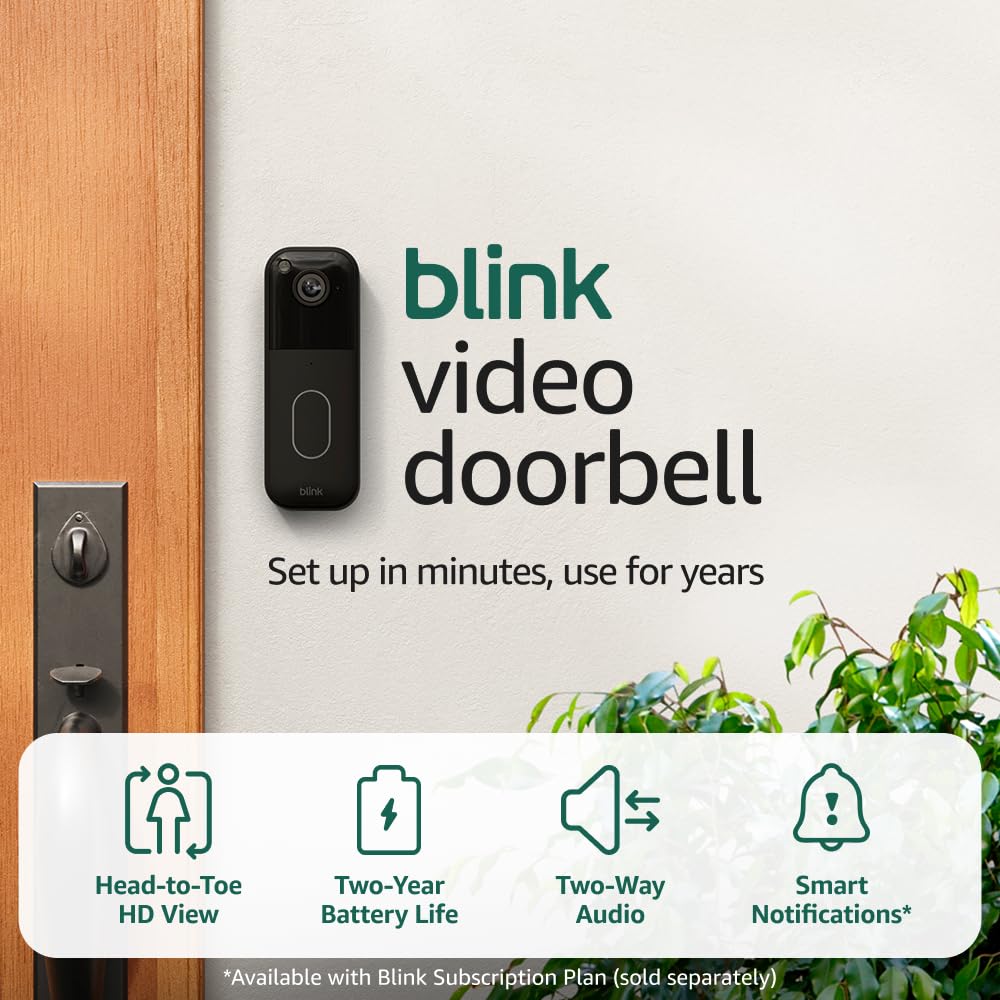
Blink, Amazon-owned, targets the budget tier and largely succeeds. The Blink Video Doorbell sells around $50 and pairs with a Sync Module 2 hub that enables local storage via USB drive — a meaningful differentiator at this price point. Battery-powered and wire-free installation makes it genuinely accessible for renters and apartment dwellers who can’t run new wiring.
The cloud plan sits at approximately $30/year, or you can bypass cloud storage entirely by using the Sync Module for local clips. SafeWise, in their resource “Best Home Security Cameras Without a Subscription,” notes that Blink’s local storage path is functional but carries a practical caveat: clips stored locally are most easily accessed when you’re on the same home network, and remote retrieval requires extra steps compared to the seamless anywhere-access buyers often expect from cloud-native systems.
Motion detection reliability and clip consistency draw mixed long-term owner feedback. The consistent pattern in aggregated professional reviews is that Blink performs well in controlled conditions — good lighting, predictable motion zones — and shows strain at the edges, with delayed alerts during high-traffic periods and occasional false triggers from environmental motion like windblown foliage. For a first apartment or a secondary property where you want baseline coverage rather than nothing, it’s a reasonable entry point. For a primary residence where reliable event documentation matters, the performance ceiling becomes apparent over time.
Battery life is Blink’s genuine headline strength: manufacturer-rated at up to two years per set of AA batteries. Owners in low-traffic environments regularly report hitting that mark. Urban deployments or short-term rentals with high guest turnover see shorter cycles — plan for annual replacement in those contexts.
Blink
$23.99
In stock on Amazon
Check price on AmazonRing: The Ecosystem Tax
Ring is Amazon’s home security brand and the market-share leader in video doorbells by a wide margin — a position that gives it enormous retail presence and, consequently, significant leverage over what buyers pay to use the product fully.
The hardware is genuinely capable. The Ring Video Doorbell 4, their mid-tier wired option, delivers 1080p HDR video, color pre-roll (a four-second buffer that captures what happened before motion triggered the camera), and solid app integration with Alexa and the broader Ring ecosystem. The New York Times Wirecutter, in their review titled “The Best Video Doorbells,” consistently rates Ring’s motion detection reliability and two-way audio quality as among the strongest in the category.
The paywall is steep relative to what you get at the free tier. Without a Ring Protect plan, you receive live view and real-time alerts — and nothing else. No recorded footage. No snapshot history. No person, package, or animal detection. The Protect Basic plan ($100/year per device as of May 2026) unlocks 180-day video history and smart alerts. The Protect Plus plan ($200/year) extends coverage to all devices at a single property and adds professional monitoring.
The lock-in concern deserves direct acknowledgment. Ring’s footage lives exclusively on Amazon’s servers with no local storage option. If you cancel your plan, your history disappears. If Amazon adjusts plan pricing — which it has done in previous years — your ongoing cost moves accordingly. PCMag, in “The Best Video Doorbells for 2026,” notes that plan pricing history is a factor buyers should review before committing, particularly for multi-device households where per-property plan costs compound.
If you’re building a Ring Protect Plus household with multiple cameras, the per-property pricing structure eventually makes the math work. For a single standalone doorbell with no expansion intent, you’re paying a premium that reflects brand recognition as much as capability advantage.
eufy
$119.98
In stock on Amazon
Check price on Amazoneufy: The No-Subscription Promise and Its Real Limits
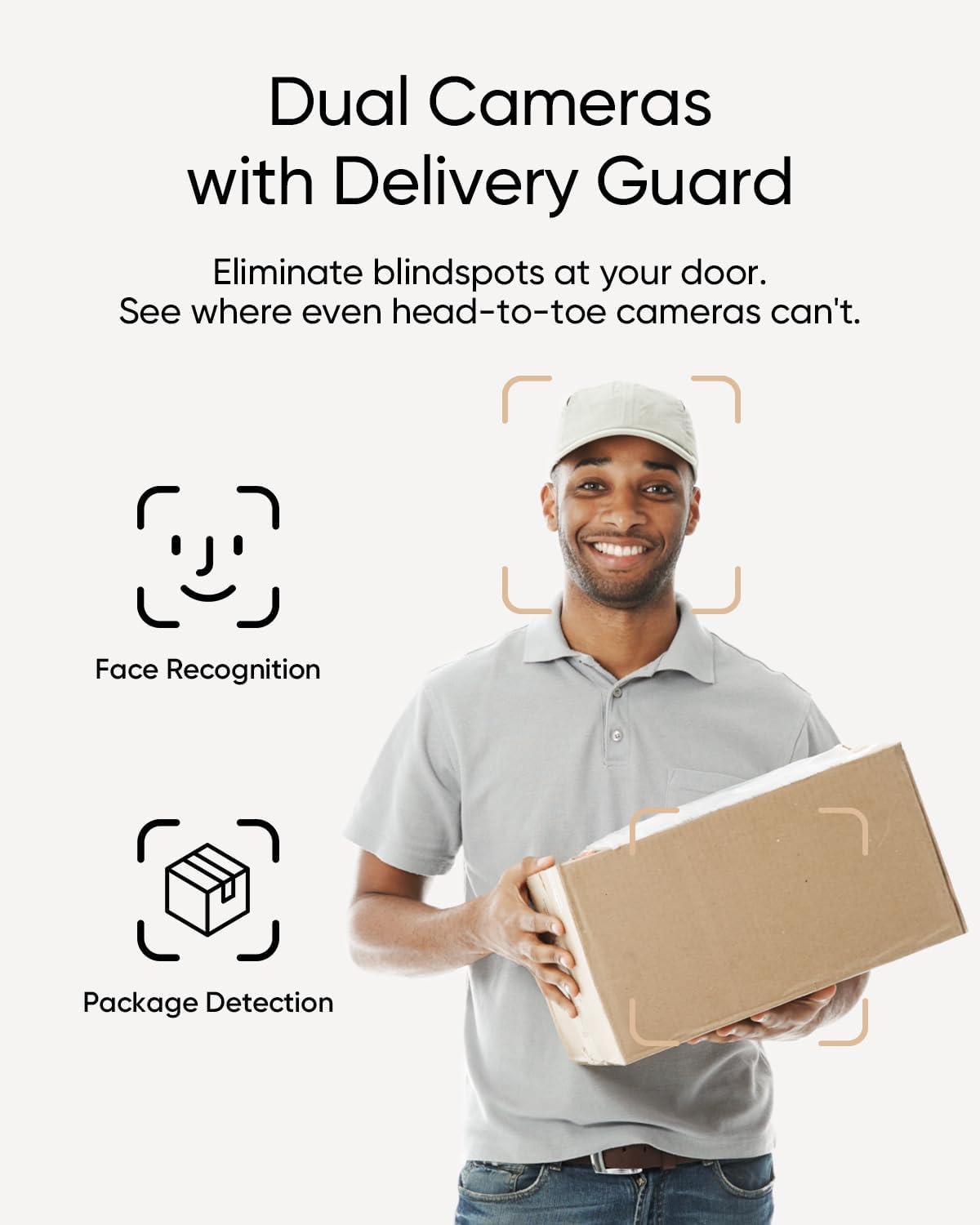
eufy (an Anker brand) has made “no monthly fees” its central positioning claim, and the technical architecture genuinely supports it. eufy doorbells store encrypted video locally on an onboard base station or the doorbell hardware itself, process motion detection and person/package recognition on-device using their AI chip, and deliver event clips and history through the eufy Security app — all without a cloud subscription requirement.
Tom’s Guide, in their eufy Video Doorbell review, confirms that person detection, 2K resolution, and local event history work as advertised at zero ongoing cost. Reviewers at Tom’s Guide consistently report that the free-tier eufy experience is functionally comparable to what Ring delivers behind its paid plan. For a three-year ownership period, eufy’s cost advantage over a single-device Ring Protect Basic setup is approximately $300, and the gap widens further against Arlo.
The trade-offs are worth naming explicitly rather than burying.
Remote access reliability: eufy’s cloud-relay for remote viewing — checking the live feed from outside your home network — has drawn reviewer complaints about intermittent dropouts. Ring’s fully cloud-native architecture handles remote access more consistently because every operation routes through the same infrastructure.
Privacy posture requires informed trust: eufy had a documented security incident in late 2022 in which certain encrypted thumbnails were found to be accessible via unguarded server URLs. The company issued patches and updated its disclosure language. Security.org, in their ongoing coverage of home security subscription and privacy issues, notes that eufy’s security architecture was updated following the disclosure, but the episode is a relevant data point for buyers who treat local storage as an automatic privacy guarantee. “Local” does not mean immune to cloud-layer exposure if the app uses cloud relay functions.
Ecosystem size: eufy’s camera and sensor ecosystem is smaller than Ring’s or Arlo’s. If you plan to expand to a full multi-camera system, verify compatibility with the eufy HomeBase before committing.
For buyers who want maximum capability per dollar over a three-to-five year horizon and are comfortable with a more contained ecosystem, eufy is the financially transparent choice. For small landlords managing a single property remotely, the zero-subscription model across multiple eufy devices compounds into a meaningful annual saving.
eufy
$119.98
In stock on Amazon
Check price on AmazonArlo: Premium Hardware, Premium Subscription
Arlo makes the best-in-class video quality argument credibly. The Arlo Essential Video Doorbell delivers a 180-degree field of view, HDR, and strong color rendering in low-light conditions. CNET, in “Best Video Doorbell Cameras for 2026,” consistently positions Arlo at or near the top of image quality comparisons, particularly for nighttime clarity.
But Arlo’s subscription math is punishing on a per-device basis. The Arlo Secure plan runs approximately $120/year per device as of May 2026 — the highest single-device plan cost in this comparison. Without it, you lose cloud video history, smart alerts (person, package, and vehicle detection), activity zones, and emergency call service access. What remains is a high-resolution doorbell that shows you who’s there in real time and saves nothing.
The value proposition improves only when you’re buying into the Arlo ecosystem at scale — pairing the doorbell with Arlo Pro outdoor cameras where a household subscription covers all devices. For Arlo’s core audience building a unified outdoor camera array, the effective per-device plan cost drops as devices are added. CNET also notes that Arlo uses end-to-end encryption for stored clips, a meaningful privacy distinction from server-side encryption models used by some competitors.
For a standalone doorbell purchase with no plans to add additional Arlo cameras, the per-device subscription cost is difficult to justify when alternatives at lower price points deliver comparable core functionality.
Ring
$179.99
In stock on Amazon
Check price on AmazonDecision Framework: Matching Your Situation to the Right Choice
If you want maximum ecosystem flexibility and already own Amazon smart home hardware: Ring Protect Plus at the property level makes financial sense when spread across multiple devices. Go in with clear awareness of the cloud lock-in and no local storage fallback, and budget for the possibility of plan price changes at renewal.
If you’re a renter or first-time buyer with a tight budget: Blink with a Sync Module for local storage gets you functional coverage without a subscription commitment. Accept the performance ceiling on motion reliability and plan on annual battery replacement if your door sees heavy traffic.
If video quality is the priority and you’re building a multi-camera system: Arlo’s per-household subscription math improves materially at scale. A standalone Arlo doorbell is hard to justify financially — the premium only pays off as part of a broader Arlo deployment.
If you want the most capability per dollar over a three-to-five year horizon and accept a smaller ecosystem: eufy is the financially transparent choice. Acknowledge the 2022 security incident as relevant context, weigh the subsequent fixes against your own privacy requirements, and recognize that the zero-subscription financial advantage is real and compounding.
The one universal rule: Never evaluate a video doorbell on hardware cost alone. Pull the plan pricing for your specific use case — single device versus multi-device, one location versus multiple properties — and run the three-year total before committing. The doorbell market is deliberately structured to make hardware look cheap. The real cost always lives in the subscription.