June 14, 2026 • Kwame Osei-Bonsu • 10 min reading time • Prices verified June 18, 2026
Ring Alarm Pro vs. SimpliSafe: Honest Monitoring Fee Math and Ecosystem Lock-In for the Self-Monitored Household
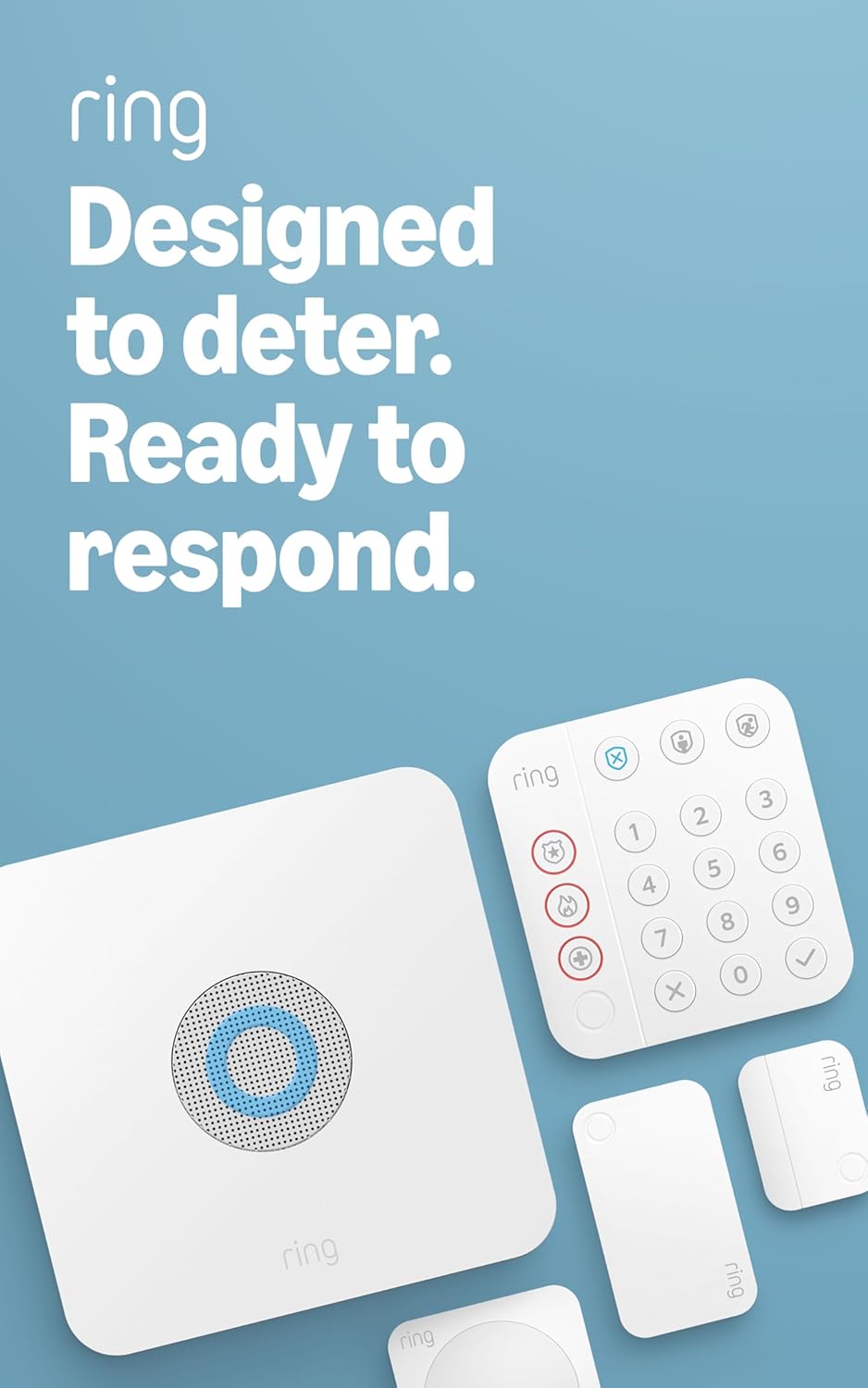
If you’ve been researching home security systems, you’ve almost certainly run into two brand names: Ring and SimpliSafe. Both make what’s called a wireless DIY alarm system — a kit of sensors, a central hub, and an optional subscription to a professional monitoring service (meaning a 24/7 call center that dispatches police or fire if your alarm goes off and you don’t respond). The appeal is real: you install the sensors yourself, no drilling required in most cases, and you control everything from a smartphone app. But here’s the part the marketing doesn’t lead with — the upfront hardware price is only one part of the math. Monitoring subscriptions, feature paywalls, and ecosystem lock-in (the degree to which your devices only work inside one brand’s universe) can dramatically change what you actually spend over three to five years. This article breaks down both systems side by side so you can make the call with clear numbers in front of you.
The Subscription Math You Need to Do Before You Buy
This is where most buyers get tripped up. The hardware starter kit is the visible price tag. The subscription is the quiet, compounding cost that actually determines which system is cheaper to own.
Ring Alarm Pro: Subscription Structure
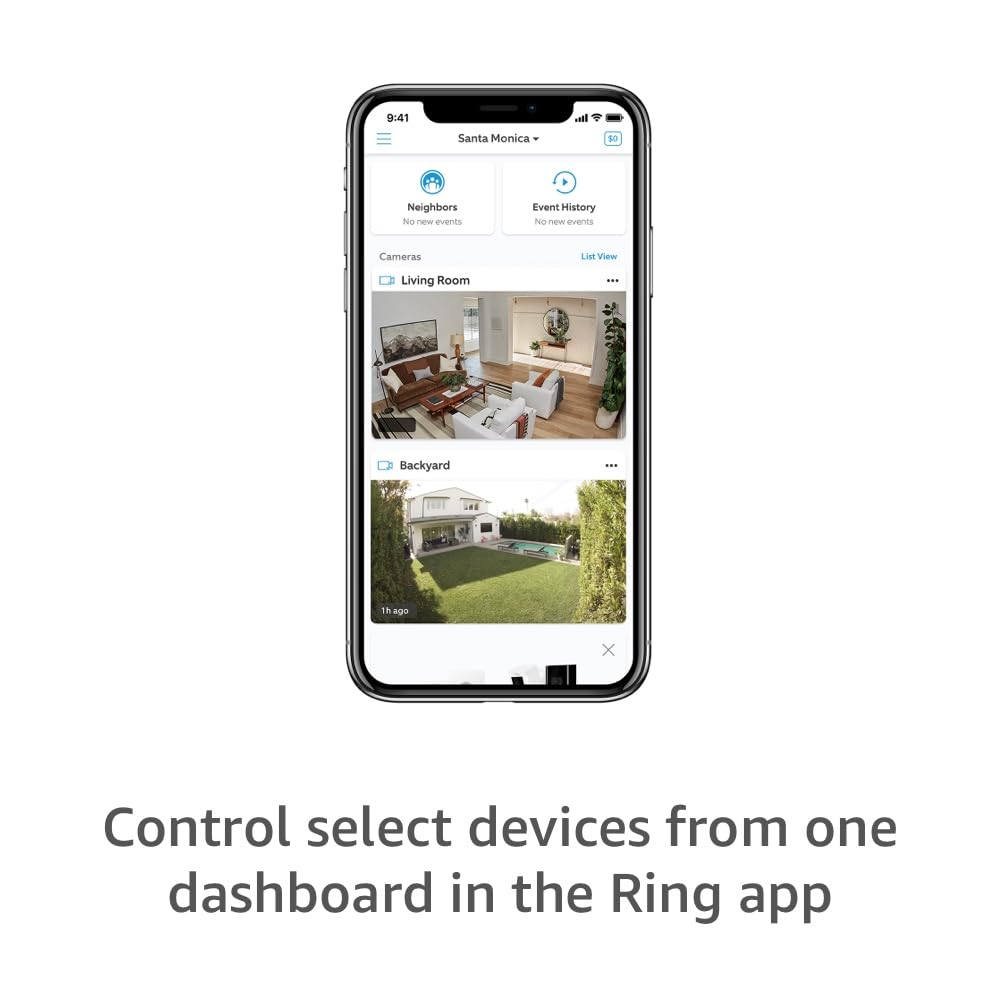
Ring Alarm Pro runs on a plan called Ring Home. As of mid-2026, Ring Home Plus — the tier that unlocks professional monitoring, video recording for all Ring cameras, and the built-in Eero Wi-Fi router features of the Alarm Pro hub — runs approximately $20/month or $200/year per location. The base self-monitoring tier (Ring Home Basic) is cheaper but locks most camera video history and all professional monitoring behind the higher plan. If you want Ring’s headline feature — the integrated Eero Wi-Fi 6 router that keeps your system online even if your ISP goes down via a cellular backup — you need Ring Protect Pro at roughly $20/month, which is the same plan. There is no practical self-monitored tier that gives you the full camera-plus-alarm feature set for less.
SafeWise’s 2025–2026 Best Home Security Systems roundup and Security.org’s 2025 Home Security Monitoring Cost Report both confirm these subscription ranges as broadly accurate for the current market.
Ring
$29.98
In stock on Amazon
Check price on AmazonSimpliSafe: Subscription Structure
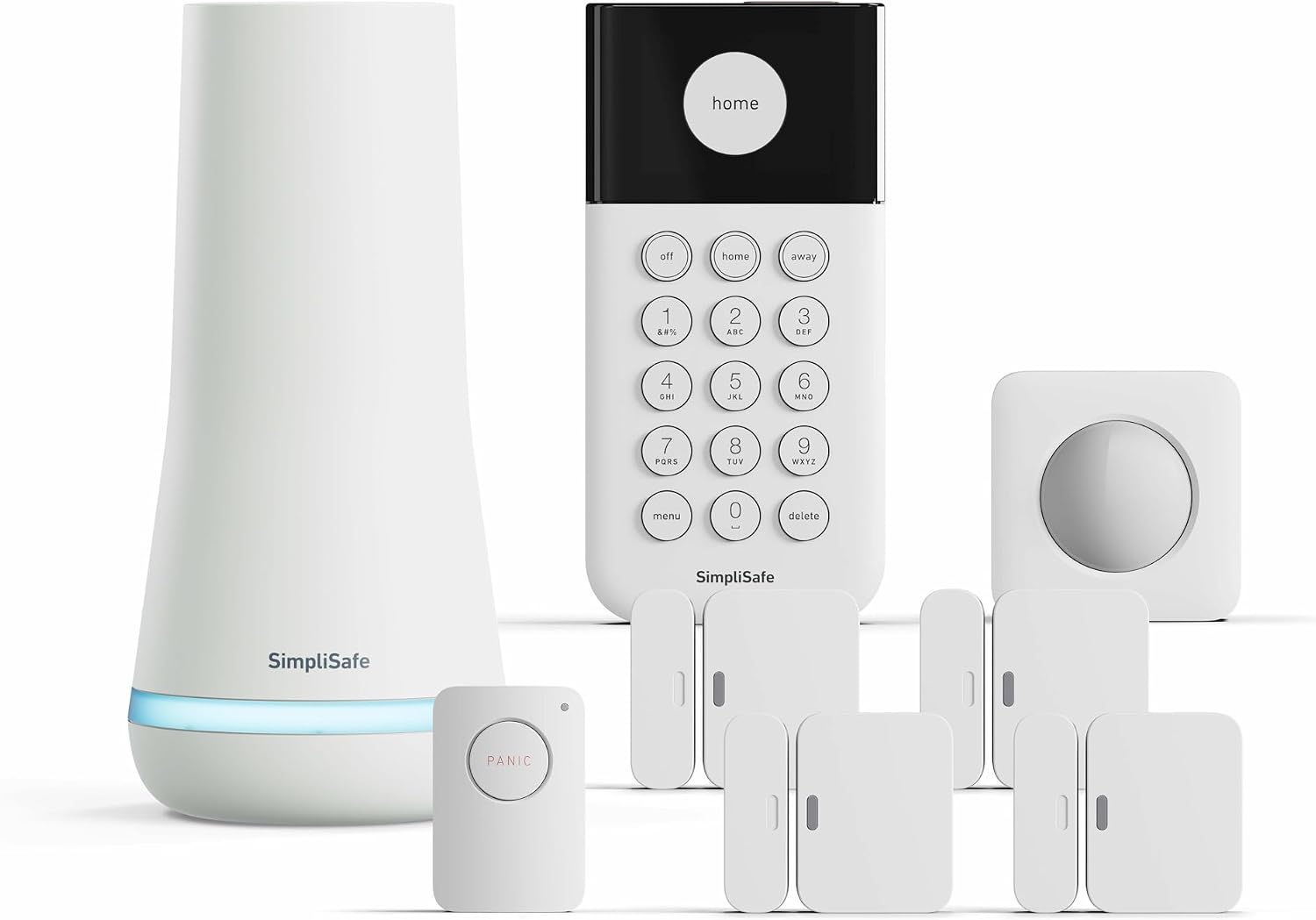
SimpliSafe offers a clearer tiered structure. Self-monitoring with live view camera access — called the Self Monitoring with Camera Recording plan — runs approximately $10/month or $100/year. Professional monitoring via their Fast Protect plan, which includes 24/7 professional response and live agent video verification, runs $30/month or $300/year. The critical distinction: SimpliSafe’s basic alarm hardware works in a genuinely free self-monitored mode. You get push notifications and can arm/disarm remotely at no cost. You lose video history and live camera feeds without a subscription, but the alarm itself remains functional.
PCMag’s Q1 2026 SimpliSafe Home Security Review confirms that the free baseline tier preserves full local alarm functionality including remote arm/disarm, making it one of the stronger no-cost self-monitoring options in the DIY category.
Ring
$14.99
In stock on Amazon
Check price on Amazon3-Year Total Cost of Ownership
Assuming a mid-size starter kit (~$250–$300 hardware), self-monitored tier with camera video access:
| System | Hardware (8-piece kit) | Subscription (self-monitor + camera, 3 yr) | 3-Year Total | Add Pro Monitoring (3 yr) | 3-Year Total (pro monitoring) |
|---|---|---|---|---|---|
| Ring Alarm Pro | $299 | $600 ($200/yr) | $899 | +$720 | $1,619 |
| SimpliSafe | $270 | $360 ($10/mo × 36) | $630 | +$660 | $1,290 |
Prices based on published rates as of May 2026, confirmed against SafeWise’s 2025–2026 Best Home Security Systems roundup and Security.org’s 2025 Home Security Monitoring Cost Report.
The spread narrows when you compare professional monitoring tiers — Ring at $20/month versus SimpliSafe’s Fast Protect at $30/month — but Ring’s lower pro-monitoring price comes bundled with camera storage that you may not need if you’re running a pure alarm build. If you have Ring cameras already deployed across your property, Ring’s bundle pricing becomes meaningfully more attractive.
SimpliSafe
$239.99
In stock on Amazon
Check price on AmazonEcosystem Lock-In: What You’re Actually Committing To
This is the question that matters most for anyone thinking past year one.
Ring: Amazon Ecosystem Depth and Dependency
Ring is an Amazon company, and that relationship runs deep in both directions. Ring Alarm Pro’s hub doubles as an Eero Wi-Fi 6 router, which sounds like a convenient bonus until you realize that the cellular backup — the feature that keeps your alarm online if your internet drops during a burglary — is baked into the Ring Protect Pro subscription and uses Amazon’s infrastructure. Your alarm’s resilience is literally dependent on Amazon keeping that service active and affordable.
CNET’s Q4 2025 Ring Alarm Pro Review explicitly flags this dependency, noting that buyers are making a long-term commitment to Amazon’s continued investment in both the Ring and Eero product lines simultaneously. Amazon restructured the Ring product line in 2023, discontinuing several camera SKUs and adjusting Eero branding in ways that created confusion among existing customers. That history is not a dealbreaker, but it is a real lock-in variable.
Ring’s ecosystem integrates tightly with Amazon Alexa and Amazon’s broader smart-home stack. If you’re building a home that runs on Alexa routines — smart lights, locks, and thermostats all choreographed through Amazon — Ring is the more capable center of that world. But for Google Home or Apple HomeKit households, Ring’s native integrations are more limited. Tom’s Guide’s 2025 Ring Alarm Pro vs. SimpliSafe comparison confirms that Ring’s alarm sensor ecosystem remains a proprietary protocol stack rather than a cross-platform standard, and that Ring’s Matter support as of mid-2026 covers select camera products but not alarm sensors.
Ring
$29.98
In stock on Amazon
Check price on AmazonSimpliSafe: Deliberate Isolation as a Feature
SimpliSafe takes a deliberately narrower approach to ecosystem integration, and reviewers consistently describe this as both a feature and a limitation. SimpliSafe sensors use a proprietary 433 MHz RF protocol. They don’t integrate with Z-Wave, Zigbee, or Matter. They don’t join your smart-home mesh. What they do is work reliably as a standalone alarm system with clean, simple operation.
PCMag’s Q1 2026 SimpliSafe Home Security Review rates its reliability and ease of use highly, specifically noting that the system’s deliberate isolation from the broader smart-home stack reduces attack surface and keeps setup genuinely simple for households that don’t need layered automation.
That isolation cuts both ways. If you want SimpliSafe’s door sensor to trigger a Philips Hue scene or unlock a Yale smart lock on entry, you’re doing that through third-party automation workarounds — not native integration. Ring can handle more of that natively via Alexa routines. For a smart-home architect building layered automations, Ring’s ecosystem ceiling is higher. For a landlord who wants an alarm that just works across multiple properties without integration complexity, SimpliSafe’s simplicity is a genuine competitive advantage.
Ring
$14.99
In stock on Amazon
Check price on AmazonCellular Backup: The Honest Reality for Both Systems
The cellular backup question deserves direct treatment. Ring Alarm Pro’s cellular backup is tied to the paid subscription. SimpliSafe also offers cellular backup, but only on its paid tiers — the $10/month self-monitoring plan and above. Neither system offers persistent cellular backup for free. If a simultaneous power outage and internet outage during a break-in is your threat model, both systems require a paid subscription to remain reliably reachable. This is a category-wide reality, not a failing unique to either brand. Security.org’s 2025 Home Security Monitoring Cost Report confirms this pattern across DIY alarm systems at the $10–$30/month price tier.
Ring
$29.98
In stock on Amazon
Check price on AmazonThe Self-Monitored Household Decision Frame
Here’s where the practical question lives: if you’re not paying for professional monitoring — you want push alerts, the ability to call police yourself, and local siren deterrence — which system earns that use case better?
SimpliSafe for the Pure Self-Monitored Build
SimpliSafe wins the pure self-monitored argument on cost, clarity, and longevity. The free tier is genuinely functional. The system will arm, trigger, and sound its 105 dB siren without any active subscription. For renters, short-term rental operators, or households that philosophically prefer not to pay recurring fees for monitoring they’ll largely handle themselves, SimpliSafe’s free baseline is a structural advantage Ring simply doesn’t match.
Security.org’s 2025 Home Security Monitoring Cost Report ranks SimpliSafe among the top systems for self-monitored households specifically because of this free-tier integrity — a distinction that matters when you’re projecting costs over three to five years of ownership.
Ring
$14.99
In stock on Amazon
Check price on AmazonRing Alarm Pro for the Camera-Heavy Amazon Household
Ring Alarm Pro makes its strongest case when you already own Ring cameras or plan to buy them. The bundled Protect Pro subscription covering both alarm monitoring and unlimited camera video history across all Ring devices is genuinely good value if you’re running four Ring cameras and a doorbell. In that configuration, you’re getting professional monitoring plus comprehensive camera storage for $20/month — a price that’s difficult to beat if you’re already inside the Ring ecosystem.
But if you’re starting fresh and your camera strategy isn’t locked to Ring, you’re paying for ecosystem convergence that may not serve you. Tom’s Guide’s 2025 comparison notes this explicitly: Ring’s value proposition strengthens considerably for existing Ring camera owners and weakens proportionally for households buying their first security system without legacy Ring hardware.
SimpliSafe
$239.99
In stock on Amazon
Check price on AmazonPrivacy and Cloud Dependency: The Honest Disclosure
Both systems are cloud-dependent in meaningful ways, and buyers deserve a clear accounting.
Ring’s privacy record carries public baggage. The brand faced documented scrutiny over law enforcement data-sharing policies, with federal investigations in 2022–2023 leading to revised Terms of Service. Amazon’s broader data ecosystem means your alarm activity, video footage, and usage patterns exist within a large commercial data infrastructure. Ring updated its policies to require warrants for most government data requests, but the architecture still centralizes significant behavioral data with a major advertising company. If that model concerns you, it should be a named factor in your decision, not a footnote.
SimpliSafe is a smaller, more focused company. Its data practices are less intertwined with advertising infrastructure. CNET’s Q4 2025 Ring Alarm Pro Review implicitly acknowledges this contrast when discussing the trade-offs of Amazon’s ecosystem integration. PCMag’s Q1 2026 SimpliSafe review notes that current-generation SimpliSafe hardware uses encrypted communication and that the system’s narrower cloud footprint is a meaningful differentiator for privacy-conscious buyers. No cloud-connected system is immune to vulnerability, but SimpliSafe’s smaller data surface area is a real distinguishing factor.
The Decision Rule
If you’re building a self-monitored household with no existing Ring cameras and cost efficiency is your priority over three to five years, SimpliSafe is the cleaner choice. The free self-monitoring tier, lower subscription costs at every paid level, and simpler operational model make it the better fit for a household that wants a dependable alarm without ecosystem entanglement.
If you’re running Ring cameras already — or you’re building an Alexa-native smart home where alarm triggers, lighting scenes, and lock automations need to work together natively — Ring Alarm Pro earns its price premium through ecosystem coherence. The $20/month Protect Pro tier covering both monitoring and camera storage is legitimate value in that specific configuration.
For landlords managing multiple properties: SimpliSafe’s multi-location management is more limited than Ring’s in terms of consolidated dashboard views, but Ring’s Amazon dependency is a more material operational risk for a business that needs the system running reliably in 2031. Neither system has a clearly superior multi-property story at the mid-tier price point — and that gap is worth evaluating against alternatives like Abode if you’re managing more than three locations.
The subscription math doesn’t lie. Run it for your specific hardware configuration and camera count before you commit. The hardware cost is a one-time decision. The subscription is a partnership you’re entering with a company for as long as you own the system.