May 10, 2026 • Kwame Osei-Bonsu • 9 min reading time • Prices verified June 18, 2026
No-WiFi Security Cameras for Cabins, Garages, and Dead Zones: 4G LTE Cellular Options Honestly Assessed
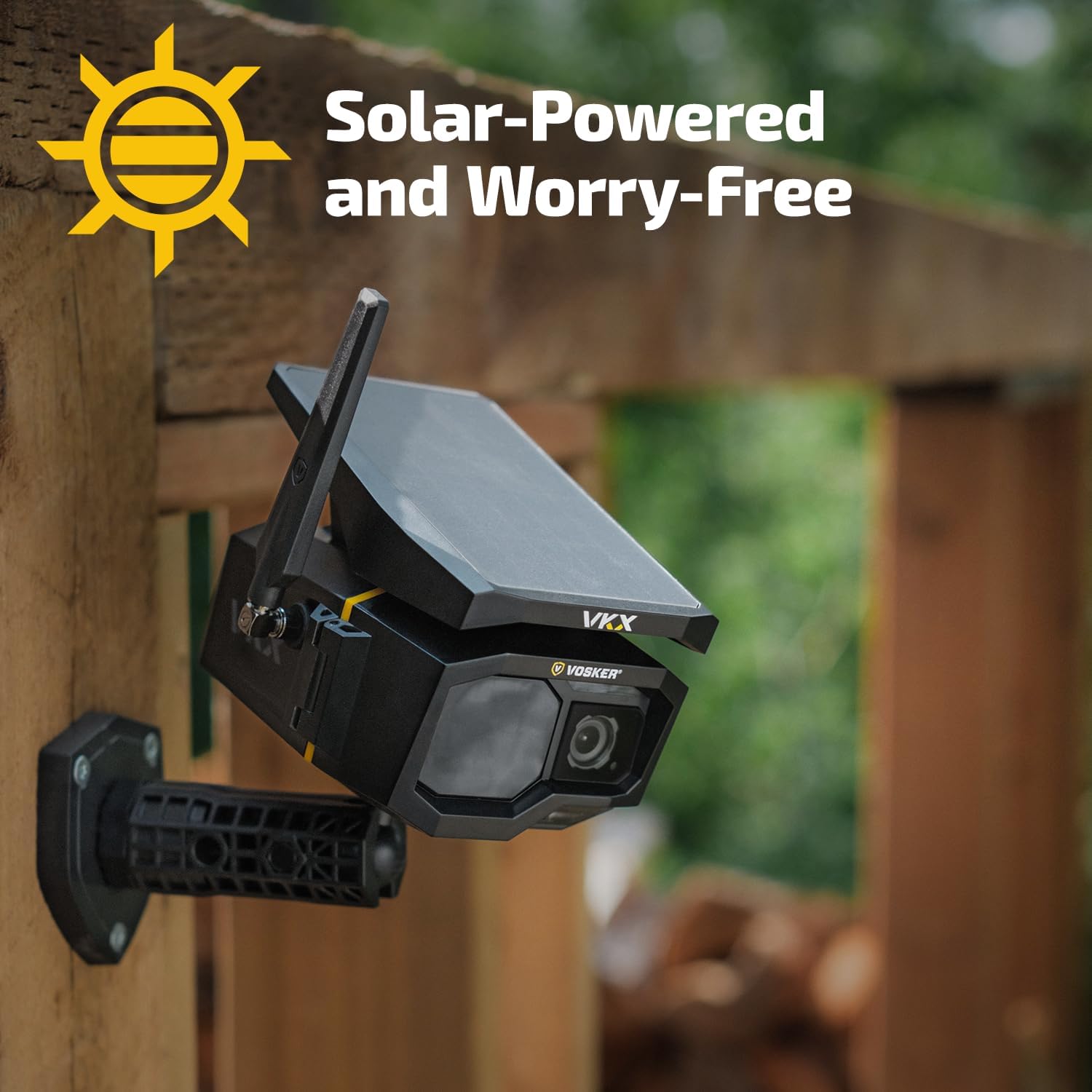
If you’re trying to put a security camera somewhere that doesn’t have an internet router — a hunting cabin in the woods, a detached garage at the back of the property, a storage unit on a rural lot — you’ve probably run into the wall that stops most people: virtually every mainstream security camera on the shelf assumes you have a WiFi network nearby. The cameras sold at big-box stores broadcast their video over your home’s wireless internet. No internet, no camera. The workaround that actually works in these situations is a 4G LTE cellular camera — a camera that contains its own cellular radio chip (the same technology your smartphone uses to make calls and browse the web when you’re away from WiFi) and uploads footage directly to the cloud over a cellular network, no router required. This guide cuts through the marketing noise, names the real hardware worth buying in 2026, explains the ongoing costs honestly, and gives you a clear decision framework for the most common dead-zone scenarios.
Why Cellular Cameras Are a Different Category — Not Just “Wireless”
This distinction trips up first-time buyers, so let’s be direct: “wireless” does not mean “no WiFi needed.” The Ring Spotlight Cam, the Arlo Pro 4, the Wyze Cam Outdoor — all of these are marketed as wireless cameras because they don’t require a hardwired ethernet cable. But they all still require a WiFi router within range. They are battery-powered and wirelessly connected, but they are not cellular.
A true 4G LTE cellular camera is a fundamentally different product class. It contains a SIM card slot (a small chip tray, identical to a phone’s) and a cellular modem. It connects to the carrier towers that blanket most of the U.S. — AT&T, Verizon, T-Mobile — and pushes video or still images to a cloud server over that cellular link. The only infrastructure it needs at the install site is power (AC outlet, solar panel, or a large battery pack) and a cellular signal. That last requirement is the one constraint that actually matters in the field: if a location has no bars of cellular service, no 4G LTE camera will help you. Check your carrier’s coverage map before purchasing anything.
As PCMag’s roundup of cellular security cameras notes, the practical use cases have grown significantly in the 2024–2026 period, with trail cam manufacturers pivoting hard into the residential security segment and purpose-built home-security cellular cameras arriving from established brands. The category is now genuinely mature, but the subscription economics and carrier dependencies still create meaningful lock-in risks that buyers underestimate.
The Actual Hardware Worth Evaluating in 2026
Purpose-Built Residential: Reolink Go PT Ultra and Reolink Go Series
Reolink’s Go series has become a reference point in this category because the company sells the camera hardware at a reasonable standalone price and allows the buyer to insert their own SIM card from any carrier — AT&T, Verizon, T-Mobile, or an MVNO (a smaller carrier that rents tower access from the big three, like Mint Mobile). That carrier-agnostic design is a meaningful advantage over cameras locked to a single network. The Go PT Ultra, Reolink’s current flagship in the line, is rated for 4K resolution and supports solar panel input, which makes it genuinely viable for off-grid cabin installations where running AC power is impractical.
Across aggregated reviews on Tom’s Guide and SafeWise, owners consistently report that the Reolink Go series handles moderate-motion detection reliably in rural settings, though reviewers note that 4K cellular streaming at full resolution burns through data plans faster than most buyers anticipate. The practical operating mode for most installations is event-triggered recording (motion activates a clip) rather than 24/7 live streaming, which keeps monthly data consumption in a manageable range.
Total cost reality check: Expect to budget a data plan in the range of $10–$25/month for a single-camera, event-triggered deployment on a prepaid plan. That’s $120–$300/year in carrier costs, on top of any cloud storage subscription the camera vendor charges.
Trail-Cam Heritage: Spypoint and Stealth Cam LTE
The hunting trail camera market solved the no-WiFi problem years before residential security caught up. Spypoint — historically a wildlife monitoring brand — has built out a residential-adjacent cellular camera line that security operators have quietly adopted for agricultural properties, construction sites, and remote land parcels. The Spypoint FLEX-S and FLEX-G models accept dual SIM cards, allowing automatic carrier failover if one network loses signal — a feature worth noting if your installation site sits near the edge of carrier coverage.
Security.org’s cellular camera guide specifically highlights Spypoint as an option for buyers who prioritize multi-carrier resilience over polished mobile-app aesthetics. The tradeoff is real: the Spypoint apps are functional but not as refined as the Ring or Arlo ecosystem experience. For a security-architecture buyer managing a rural property portfolio, “functional and resilient” frequently outranks “polished.”
Stealth Cam’s LTE series occupies a similar position — robust hardware with roots in wildlife monitoring, now being sold into the residential security channel. Manufacturer-rated battery life on the Stealth Cam LTE models runs into weeks on a standard pack under low-trigger conditions, which matters when the installation site is a three-hour drive away and you’re not cycling batteries monthly.
Carrier-Bundled Option: Verizon Smart Camera (LTE)
Verizon has periodically offered an LTE camera bundled directly into a wireless plan, marketed primarily at small business and property monitoring use cases. The carrier-bundle path has an obvious downside: you are fully locked into one carrier’s infrastructure, pricing, and product roadmap. If Verizon discontinues the device or changes the plan structure, you have limited options. CNET’s outdoor security camera coverage notes this category of carrier-sold hardware has a shorter average product lifecycle than third-party manufacturers, which is a long-term ownership risk worth pricing in.
The Cost Architecture: Running the 3-Year Math
This is where buyers who treat cellular cameras as a simple one-time purchase get surprised. Here’s an honest cost model for a single-camera installation over 36 months:
By the numbers — single 4G LTE camera, 3-year TCO estimate (2026):
| Cost Component | Low End | High End |
|---|---|---|
| Camera hardware | $80 | $250 |
| SIM/activation fee | $0 | $30 |
| Monthly data plan (×36) | $360 | $900 |
| Cloud storage subscription (×36) | $0 | $360 |
| Battery/solar panel (if off-grid) | $40 | $150 |
| 3-Year Total | $480 | $1,690 |
The wide range reflects the difference between a prepaid low-data plan on a budget carrier with local SD card storage, versus a premium monthly plan plus cloud subscription on a name-brand ecosystem. Most real deployments land between $600 and $900 over three years per camera. For a landlord monitoring three remote properties, that math becomes $1,800–$2,700 before any equipment replacement — a figure that rarely appears in the listing price comparisons on product pages.
SafeWise’s no-WiFi camera guide explicitly flags the data plan variable as the most commonly underestimated cost in this category, and that assessment holds up across the operator reviews aggregated through mid-2026.
The Real Constraints: What Cellular Cameras Can’t Do
Honest assessment means naming the failure modes, not just the wins.
Latency is real. 4G LTE cameras introduce noticeable delay between a live event and your notification. Owners consistently report 20–45 second notification lag on event-triggered clips, versus the 5–15 second window typical of local-network WiFi cameras. For deterrence purposes — knowing someone entered the property — this is acceptable. For real-time intervention, it is not.
Bandwidth caps bite at high resolution. A camera recording 4K clips and uploading them over cellular will exhaust a 10GB/month data plan in days under active-motion conditions. Most experienced operators cap their cellular cameras at 1080p for event recording and reserve higher resolutions only for manual live-view checks. This is a workflow discipline issue, not just a hardware spec.
No carrier signal, no camera. This sounds obvious, but it catches buyers who assume AT&T’s coverage map reflects reality at ground level in a forested valley. Verify with a phone — physically stand at the proposed camera mount location with the carrier’s SIM in a handset and confirm you have at least two bars of 4G LTE. One-bar marginal coverage will produce unreliable uploads and missed events.
Ecosystem fragmentation is higher than WiFi cameras. Because cellular cameras often use proprietary apps tied to the manufacturer’s cloud server, there is minimal integration with broader smart home platforms like Google Home, Amazon Alexa, or Apple HomeKit. Buyers building layered security architectures should treat cellular cameras as isolated monitoring nodes, not integrated ecosystem components — at least until the category standardizes further.
Decision Framework: If X, Then Y
The buyer evaluation in this category is genuinely straightforward once you name the variables:
If the site has zero cellular signal: No 4G LTE camera works. Your options are local-only NVR recording (Lorex, Hikvision systems running on a local network with battery/solar backup), satellite-uplink cameras (expensive, high latency, primarily commercial), or accepting that the location is unmonitored and deploying physical deterrents instead.
If the site has reliable cellular signal and you need clean video evidence: Prioritize a camera with local SD card backup — Reolink Go series — so clips are stored on-device even if the upload fails. Cloud-only cellular cameras leave you with nothing if the upload window closes.
If you’re managing multiple remote properties and need centralized oversight: The Spypoint FLEX-G’s dual-SIM failover is worth the premium. Managing three properties with single-carrier cameras where one routinely drops signal is a worse operational outcome than paying more for resilient hardware across all three.
If you want the lowest ongoing cost: Carrier-agnostic hardware (Reolink Go) plus a prepaid MVNO data SIM (Mint Mobile on T-Mobile towers, for example, at roughly $10–$15/month for a small data allotment) plus local SD card storage minimizes the monthly bleed. You sacrifice the polished app experience; you keep $200+/year per camera.
If this is a temporary installation (construction site, seasonal cabin): Month-to-month prepaid SIMs and lower-cost hardware protect you from long-term carrier contracts. Don’t sign an annual data plan for a six-month deployment.
If long-term ecosystem integration matters to you: Cellular cameras are not the right primary layer. They are a supplementary node for locations where your primary WiFi ecosystem cannot reach. Budget accordingly — treat them as the edge case they are, not as the core of a connected security architecture.
The category is genuinely useful for the problems it solves. The buyers who get burned are the ones who purchase a 4G LTE camera expecting a seamless Ring-equivalent experience and discover the data costs, latency, and ecosystem isolation the hard way six months in. Price the full system honestly before you buy the hardware, and the cellular camera becomes a straightforward, reliable tool for exactly the dead zones it was built for.