May 3, 2026 • Kwame Osei-Bonsu • 9 min reading time • Prices verified June 18, 2026
Blink's True 3-Year Cost: Sync Modules, Subscriptions, and Battery Math Before You Buy
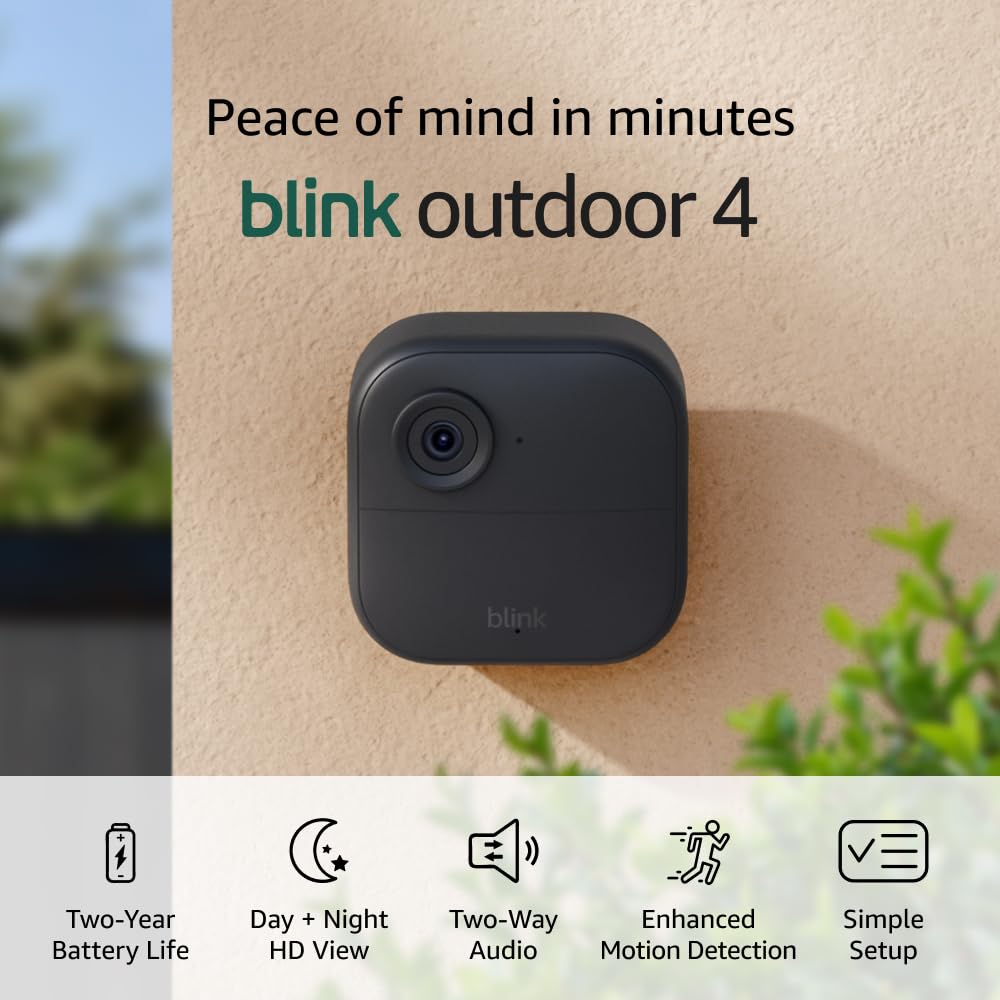
Blink is one of the most popular budget security camera brands in the country, and it’s easy to see why: starter kits often run under $100 at retail, the cameras are wireless, and setup takes an afternoon rather than a weekend. If you’re new to home security cameras, “wireless” simply means the cameras run on batteries and connect to your home’s Wi-Fi — no electrician needed. “Subscription” refers to the monthly or annual fee you pay to access recorded video footage; without it, some cameras only alert you in real time but can’t save a clip for later review. Blink’s pricing looks clean on the box. But once you add up subscription costs over several years, the Sync Module hardware that ties the system together, and the battery replacements that wireless cameras demand, the number climbs in ways that catch buyers off guard. This article does that math for you — camera by camera, year by year — so you can make a genuinely informed call before your purchase is final.
| EDITOR'S PICK[Blink Outdoor 4 XR – two-year b…](https://www.amazon.com/dp/B0DV4VQL6Y?tag=greenflower20-20) | Mid-tier[Blink Outdoor 4 – Wireless smar…](https://www.amazon.com/dp/B0DHLQT3CG?tag=greenflower20-20) | Budget pickBlink Outdoor 4 – Wireless smar… | |
|---|---|---|---|
| Sync Module | Included | Included | Not included |
| Resolution | — | 1080p HD | — |
| Range (open-air) | 1000 ft | — | — |
| Cameras included | 4 | 3 | 1 (add-on) |
| Price | $104.99 | $65.99 | $23.99 |
| See on Amazon → | See on Amazon → | See on Amazon → |
What the Blink Ecosystem Actually Consists Of
Before pricing anything, it helps to understand Blink’s architecture, because the system has a few moving parts that don’t always appear clearly in marketing materials.
The Cameras. Blink’s current lineup centers on three products: the Blink Outdoor 4 (fourth generation, released 2023), the Blink Mini 2 (a plug-in indoor camera), and the Blink Video Doorbell. The Outdoor 4 is the workhorse for most homeowners — battery-powered, weather-resistant, and rated for 1080p HD video. PCMag’s review of the Blink Outdoor 4 praises its battery longevity and simple setup but flags that motion detection customization lags behind competitors at the same price point.
The Sync Module. Here’s the part that surprises most buyers: Blink cameras don’t operate fully independently. They communicate through a hub device called a Sync Module (currently the Sync Module 2), which bridges the cameras to your Wi-Fi network and — critically — manages local storage if you plug in a USB drive. Each Sync Module supports up to ten cameras. If you want more than ten cameras, you need a second Sync Module, which means a second $35 hardware purchase and a second network device to manage. This scales surprisingly fast for landlords or multi-zone homeowners.
The Subscription (or Lack Thereof). Blink’s subscription is called the Blink Subscription Plan. As of early 2026, pricing runs approximately $3/month per camera or $10/month for unlimited cameras on a single account — Amazon has adjusted these tiers more than once since the service launched, so always verify current pricing at checkout. Without a subscription, you lose cloud video storage entirely. You can still use local storage via a USB drive plugged into the Sync Module, but that path has its own trade-offs (more on that below). CNET’s Blink Home Security Review notes this cloud-or-local binary as one of the ecosystem’s defining tensions for buyers who want flexibility.
The 3-Year Cost Model: A Real Number to Work With
Let’s build the math for a common mid-tier deployment: a homeowner with five Blink Outdoor 4 cameras covering front door, back door, driveway, side gate, and garage. This is a representative install for a single-family home or a small rental property.
Hardware (Year 1):
- Blink Outdoor 4, 5-camera kit: ~$200 (frequently on sale; Amazon list price as of 2026)
- Sync Module 2 (often bundled, but priced separately at ~$35 if not)
- USB drive for local storage, 64GB: ~$10–$15
Year 1 hardware: ~$215–$250
Subscription (Years 1–3):
Blink’s unlimited-camera plan at $10/month runs $120/year. Over three years, that’s $360.
If you opt for the per-camera plan at $3/month, five cameras cost $15/month — $180/year, or $540 over three years. The unlimited plan is clearly better math at five cameras; the per-camera plan only makes sense at one or two cameras.
Battery Replacement:
This is where many buyers underestimate long-term cost. The Blink Outdoor 4 runs on two AA lithium batteries. Blink’s manufacturer rating is “up to two years” of battery life, but that figure assumes a relatively low motion-detection frequency — roughly 4,000 five-second clips. Tom’s Guide’s Blink Outdoor 4 review notes that real-world battery life is heavily dependent on how often the camera triggers: in a high-traffic zone like a driveway, owners report replacing batteries every 6–12 months rather than the rated 24 months.
Conservative estimate (annual replacement per camera): $3–$5 for a pair of quality AA lithiums. Five cameras, replaced once per year: ~$15–$25/year, or $45–$75 over three years.
Moderate estimate (high-traffic install, replacement every 9 months): costs roughly double that range — $90–$150 over three years.
By the Numbers: 5-Camera Blink System, 3-Year Total Cost
| Scenario | Hardware | Subscription (Unlimited) | Batteries | 3-Year Total |
|---|---|---|---|---|
| Low-traffic, annual battery swap | $235 | $360 | $60 | $655 |
| High-traffic, 9-month battery swap | $235 | $360 | $120 | $715 |
That $200 kit becomes a $650–$720 system commitment. That’s not a deal-breaker — it’s still competitive — but it’s a materially different number than the box price implies.
Local Storage: The “Free” Option That Isn’t Quite Free
Blink markets local storage via the Sync Module 2’s USB port as a no-subscription alternative, and SafeWise’s Blink camera review covers this path approvingly for users who want to avoid recurring fees. But the practical limitations are worth spelling out.
What local storage gives you: Clips save directly to a USB drive plugged into your Sync Module. No cloud, no monthly fee, no footage in Amazon’s servers. For privacy-conscious users, this is genuinely appealing.
What it takes away:
- You cannot access clips remotely through the Blink app with the same fluidity as cloud storage; browsing local clips from outside your home network requires additional configuration and is not as seamless as cloud playback.
- If someone steals or destroys the Sync Module — which is typically located indoors near your router — they take the footage with them.
- You lose the AI-driven “Person Detection” feature, which is paywalled behind the subscription plan. Without it, every motion event triggers an alert regardless of what caused it: wind, animals, cars. Owners on the local-storage path consistently report higher alert fatigue as a result.
The local-storage path makes the most sense for a secondary camera in a low-stakes location (a basement, a utility room) where you want a visual record but remote cloud access isn’t critical. For front-door or perimeter cameras where real-time remote review matters, the subscription’s value is harder to argue against.
Where Blink Wins, and Where Competitors Gain Ground
It’s worth naming the specific use cases where Blink’s total cost model actually holds up well — and where buyers should seriously consider alternatives.
Blink is a genuine value when:
- You’re covering a secondary property (vacation home, rental unit) where camera count is low (1–3 cameras) and you can use the per-camera subscription efficiently
- You want a fully wireless setup with minimal installation effort and you’re not yet ready to invest in a wired NVR (Network Video Recorder — a local hard drive system that stores continuous footage) system
- You’re an Airbnb host who wants visible exterior cameras as a deterrent and needs only basic clip review between guest stays
Blink starts losing ground when:
- You need more than 10 cameras — at that point, you’re buying a second Sync Module and the ecosystem management overhead grows
- You need continuous video recording (CVR), not just motion-triggered clips. Blink does not offer CVR even with a subscription; it is a clip-based system by design. Security.org’s analysis of home security camera subscription tiers identifies CVR as the primary differentiator between clip-based budget systems and mid-tier alternatives like Ring and Arlo
- You’re building a system you expect to expand significantly over 3–5 years. Blink’s ecosystem depth — integrations, third-party compatibility, local RTSP streaming — is shallower than competitors like Arlo Pro 4 or Hikvision IP camera systems
The ecosystem lock-in flag: Amazon acquired Blink in 2017, and the ecosystem is now deeply integrated with Alexa. That’s a convenience feature for Amazon households, but it also means Blink’s roadmap is governed by Amazon’s strategic priorities, not security-first product development. PCMag’s review observes that Blink’s feature velocity has slowed compared to competitors, and several planned features announced in 2022–2023 have not shipped at scale. Buyers building a 5-year security architecture should weight this carefully.
Decision Rules: If X, Then Y
If you’re sitting with a decision pending, here’s how to map your situation to an outcome:
If your install is 1–3 cameras and you mainly want deterrence + basic clip review: Blink Outdoor 4 is a legitimate choice. Even with the per-camera subscription, your 3-year cost stays under $300–$350, which is hard to beat for a weatherproof wireless system. Go in eyes open on battery management.
If your install is 4–10 cameras and you want cloud storage: Use the unlimited subscription plan — the per-camera pricing is actively punishing at this count. Your 3-year cost lands in the $600–$750 range for a five-camera system. Compare this directly against a Ring Alarm Pro or SimpliSafe ecosystem before committing; at this tier, feature differences become meaningful.
If you need continuous recording or professional monitoring: Blink is not your system. Stop here and evaluate Ring, Arlo, or a local NVR build. Blink has no CVR, no professional monitoring integration, and the gap only grows as your requirements do.
If you’re a landlord or STR host managing multiple properties: Blink’s account structure (one subscription covers all cameras on one account, regardless of property) is more favorable than it appears. The $10/month unlimited plan across 3 properties with 3 cameras each is $120/year total — that math is competitive. The risk is remote management limitations and the clip-only recording model when a dispute requires detailed footage.
If privacy is a primary concern and you want no cloud storage: Local storage via Sync Module is viable but demands realistic expectations: no CVR, degraded remote access, and loss of Person Detection. Budget an extra $15 for a quality USB drive and accept the trade-offs consciously rather than discovering them after setup.
The bottom line isn’t that Blink is a bad system. For what it is — a battery-powered, motion-triggered, clip-based camera system with clean setup and an approachable app — it does what it promises. The gap between what buyers expect and what they actually spend comes from underestimating the subscription commitment and overestimating battery longevity in real-world conditions. Run the 3-year number first, then decide. That’s the only way to know whether Blink’s sticker price is actually the deal it looks like from the shelf.